How Alex Ip Would Fix Atlanta

How I’d Fix Atlanta — Let Noncitizens Vote In Local Elections
Alex Ip
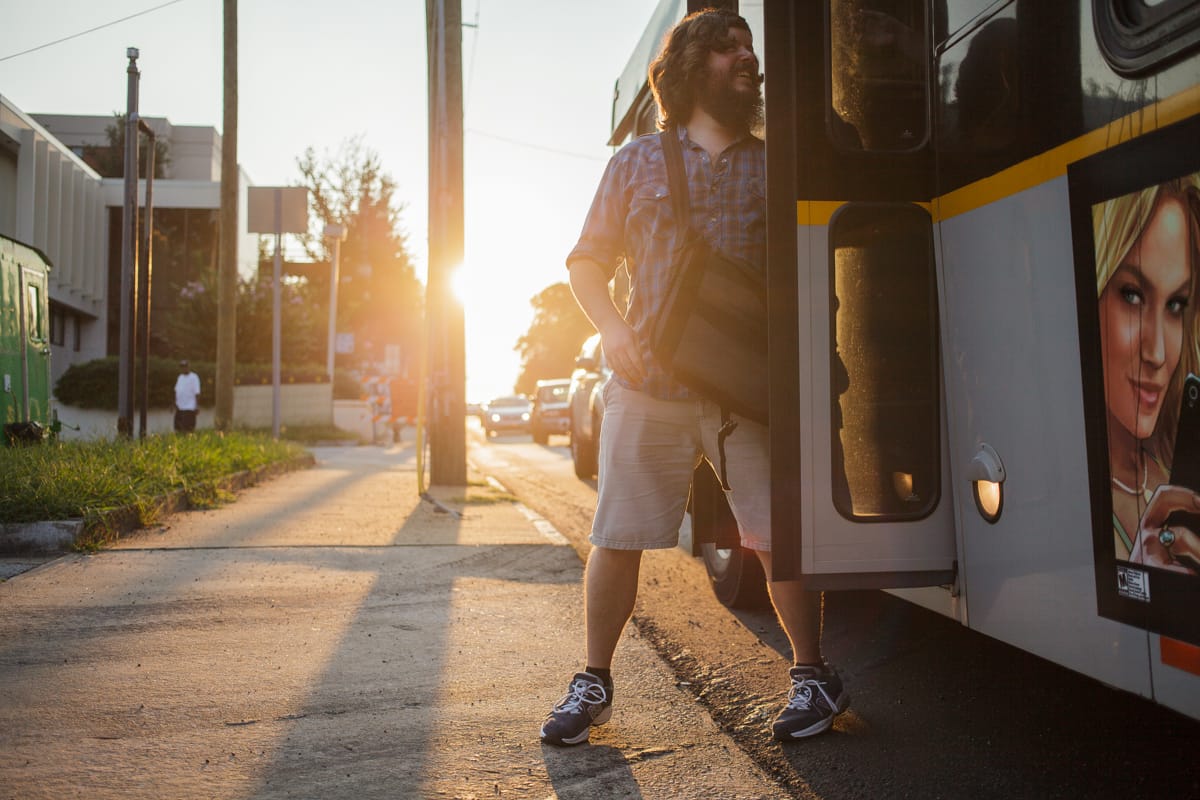
On a Monday afternoon in May, I was waiting for a bus in Buckhead that was supposed to come every 15 minutes.
But as roughly 30 other riders—mostly Spanish-speaking immigrants—and I waited at Lindbergh during the evening rush hour, the 4:30pm bus never showed. We ended up waiting twice as long for the 4:45pm to arrive.
Finally, we left the wealthy confines of Buckhead for Buford Highway. As we crossed the DeKalb County line, the landscape transformed from luxury office towers and five-over-ones into Bangladeshi restaurants and taquerias, strip malls and boba shops. Workers were putting the finishing touches on sidewalks. At long last, bus riders of Atlanta’s busiest bus route would finally not get dumped onto a patch of dirt next to the most dangerous road in our state—a place where the 45-mile-per-hour speed limit, judging by the cars flying by, is simply a suggestion.
I moved from Hong Kong—more than 8,000 miles away—to attend Georgia Tech in 2018. I’d never lived anywhere as small and cold as Atlanta, but I fell in love with the city so much that I moved back after attending grad school. There are many more like me on this bus and in this city: one in seven metro Atlantans are immigrants. We pay our taxes ($9.1 billion every year, to be exact) and put in the hard work (immigrants are 5% more likely to join the workforce than our native-born counterparts, and 41% more likely to start a business), send our kids to public schools, and try to build a better future for our families and our neighbors.
Yet, as the riders shuffle off the bus onto fresh concrete, I keep thinking to myself, we are not getting what we paid for. It feels like ATL doesn’t love us back.
Let's go down the list. Barely half of our city has sidewalks on a good day, and the number is worse in poor, Black, and Brown neighborhoods. Our transit system has been in and out of crises (Have you seen the ghost buses?), and the More MARTA sales tax hike we’ve been paying for the last nine years has amounted to absolutely nothing. Our county officials gift-wrapped Elon Musk a $10 million tax break using our hard-earned money to create no new jobs at a massive data center, an eyesore along the BeltLine. Latino immigrants are three times as likely as U.S.-born Atlantans to be working poor. We have some of the worst tenant protections in the nation. ICE has been prowling across the city, emboldened by a new law requiring local law enforcement cooperation passed by Republican state legislators, whom we immigrants did not elect, locking up more than a thousand people in the basement of their field office.
One such casualty was our colleague, Spanish-speaking independent journalist Mario Guevara. He was arrested while covering a protest along one of the strip malls the bus just passed. He was then deported to El Salvador after spending more than three months in detention. Nobody who supposedly represents us, Democrat or Republican, has even issued anything as much as a statement acknowledging the absurdity of this situation.
I took the 39 bus that day with another colleague to gather interviews for a reporting project on Atlanta’s state of transit, and whether the city is ready for the World Cup. Spoiler alert: we’re not even close. Nobody on that bus will be able to afford to go to a World Cup game to celebrate our culture and our home countries. And that’s if we felt safe enough not to have someone pounce on us near the stadium gates—not to mention knock on our doors in the middle of the night.
How would things be different if everyone on the bus had a vote?
Americans love to complain about “taxation without representation,” but the buck stops with those who were not fortunate enough to be born on American soil. We are counted in the decennial census, which affects the amount of federal funding that flows into each district. However, we can’t choose the people who spend our money, who run our schools, who manage our city on our behalf.
There’s a reason why none of our municipal candidates, even those who claim to be first-generation immigrants, have even bothered creating multilingual campaign websites, despite the fact that one out of six Georgians speaks a language other than English at home. We are also locked out of referendums that shape local policies directly affecting our lives.
Of course, only American citizens are allowed to vote in federal elections—the law is very clear about this. But this concept has a history younger than Coca-Cola. According to the nonprofit group Chinese for Affirmative Action, "immigrants voted in 40 states at some point in time between 1776 and 1926, not just in local elections, but also in state and federal elections." (As it turns out, Georgia allowed noncitizen voting during the late 19th century.)
The subtext here was that the noncitizen voters then were predominantly white, and mostly men. The moment women and people of color started fighting for our own civil rights, the goalposts were moved to keep “those immigrants” out of the democratic process.
That being said, federal law does not explicitly prohibit states from letting noncitizens vote in state and local offices, and a handful of states and localities have taken tentative steps to affirm our rights to shape the places we call home through the ballot box. Our nation’s capital secured approval from Congress to allow noncitizens to vote in local elections. New San Franciscans can vote for the local Board of Education. Similar provisions apply in some cities across Maryland and Vermont.
There have been roadblocks, of course. An increasing number of states, predominantly Republican-controlled (surprise, surprise), have passed constitutional bans that preempt this from happening. The citizens of Oakland, California, like its neighbor across the bay, extended voting rights in school board elections to noncitizens, but the city hasn’t been able to implement the measure. And in New York City, a City Council-approved measure to allow lawful permanent residents and other non-citizens authorized to work to participate in their recent elections was declared unconstitutional by the New York Court of Appeals.

It’s dispiriting to see how the U.S. is diverging from much of the developed world when it comes to noncitizen voting rights and many other areas downstream from a functioning, healthy democracy. But history is never settled and always evolving. Georgia is one of the few competitive states that has not taken an explicit stance on the future of noncitizen voting. Atlanta is the cradle of the Civil Rights movement. The best time to fight for our representation and a future we can not just imagine, but take part in, is right now.
As I hop off the bus in Doraville, I can’t help but look at my fellow riders going their separate ways with respect. We might just be starting on our journeys toward citizenship, and many of us might never make it that far, but we’re already here. We'll find a way to get to the places we need and want to go. I'm inviting the rest of you to come along for the ride as well.
Alex Ip is the founder, publisher, and editor of The Xylom. He obtained a degree in Environmental Engineering at Georgia Tech, which reinforced his belief in healthy, interconnected communities. Now living in the Oakland neighborhood, you can see him around town on his e-bike, occasionally with his cat Hudson.
How I'd Fix Atlanta was an essay series for four seasons. Now we get to decide what it will be next. Thank you for reading.